Delete Blank Rows in Google Sheets: A Step-by-Step Guide
Learn the quickest way to remove blank rows in Google Sheets - perfect for keeping your spreadsheets clean and organized.
Contents
When dealing with a small dataset in Google Sheets, manually removing empty rows can be quicker than setting up complex tools or formulas. Let me show you how to handle those pesky blank rows, both manually and using filters.
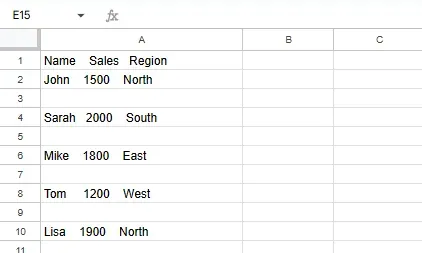
Let's work with this sample data to make it crystal clear:
Method 1: Manual Removal (Perfect for Small Datasets)
- Open your spreadsheetsome textLook for empty rows scattered through your data
- Select Multiple Empty RowsPress and hold Ctrl (if you're on Mac, use Command)Click each row number on the left that's emptyYou'll see them highlight in blue as you click
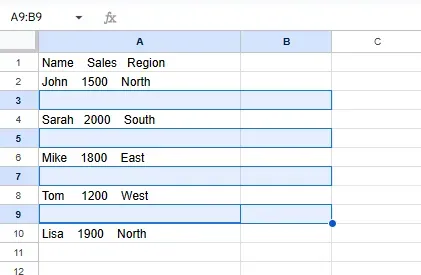
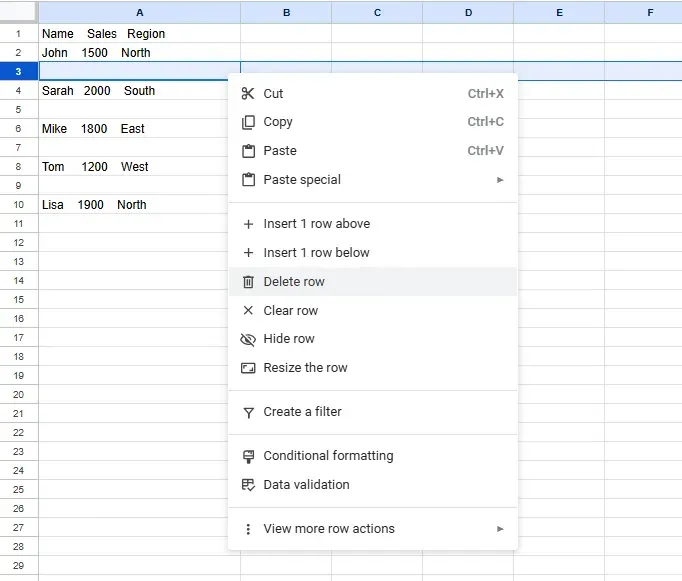
- Remove the RowsRight-click any of the blue-highlighted row numbersLook for "Delete selected rows" in the menu that pops upClick it to remove all selected rows at once
Method 2: Using Filters (Better for Larger Datasets)
When you're dealing with a larger spreadsheet, filters become your best friend. They can either hide empty rows temporarily or help you identify them for deletion. Here's how:
- Select Your Data RangeClick and drag from the first cell to the lastInclude all columns and rows, even the empty ones
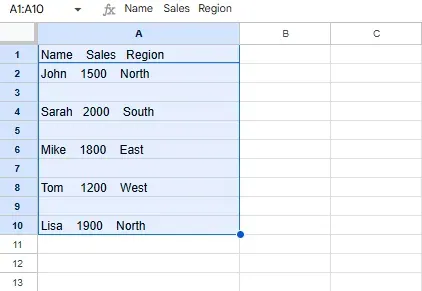
- Add Your FilterFind the filter icon (looks like a funnel) in the toolbarClick it to activate filters
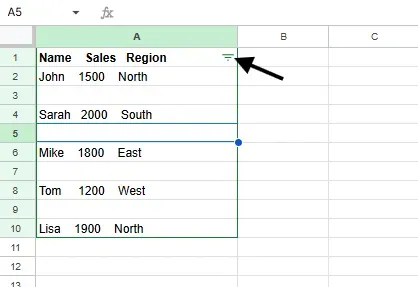
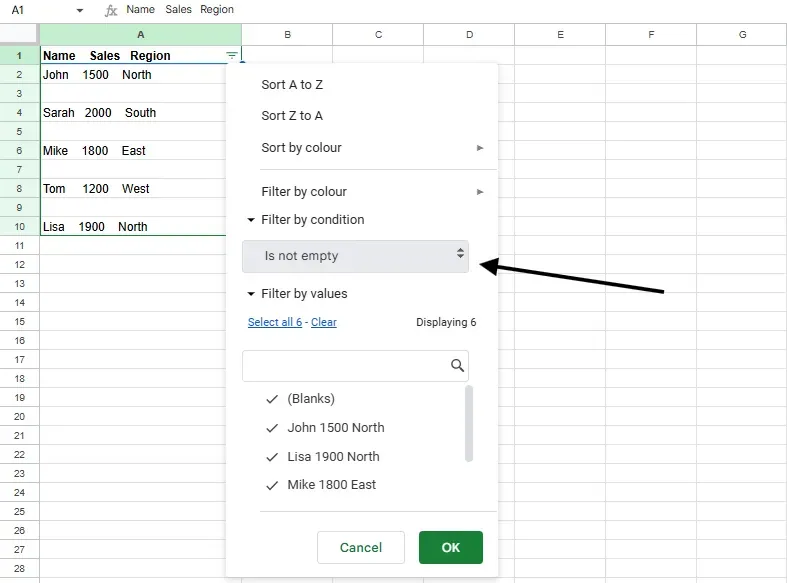
- Filter Out Empty RowsClick any column's filter arrowGo to "Filter by condition"Choose "Is not empty"Click "OK"
Pro tip: Before you start deleting rows, especially in a large spreadsheet, make a copy of your sheet. This gives you a safety net in case you need to revert any changes.