NetSuite has become the go-to ERP for mid-market companies. But when it comes to Accounts Payable, it often feels like you're still operating in 2006.
Despite robust general ledger and multi-entity capabilities, core AP workflows inside NetSuite lack automation, visibility, and control.
The result? High processing costs, slow approvals, missed discounts, and fragmented global payments. Let’s unpack why and what leading finance teams are doing about it.
Where NetSuite’s Native AP Functionality Falls Short
Out-of-the-box, NetSuite offers basic AP tools. But that’s where the problems begin.
Manual, slow, and error-prone AP workflows persist because:
- OCR-based invoice ingestion isn’t built in
- Approval workflows are rigid and email-dependent
- Vendor payments (especially cross-border) require external portals
- No native FX optimization, cash flow scheduling, or touchless processing
This puts strain on AP teams as volumes scale and limits treasury visibility for CFOs.
Real Pain Points in NetSuite AP
Here’s what finance teams using NetSuite report most often:
1. Manual Invoice Processing
Invoices arrive via email and get keyed in or uploaded manually. No built-in OCR, no automated 3-way match, and limited duplicate detection.
2. Clunky Approvals
Static, role-based approval flows often break with employee changes. There's no mobile, Slack, or Teams integration. Approvers miss emails, AP teams chase them.
3. Poor Global Payment Handling
You need third-party bank portals or file uploads to pay international vendors. That means:
- Manual FX conversions
- High risk of payment errors
- Poor audit trails and reconciliation delays
4. Weak Visibility and Forecasting
Without real-time payable dashboards, treasury teams lack:
- Dynamic DPO management
- Visibility into entity-level liabilities
- FX-adjusted forecast integration
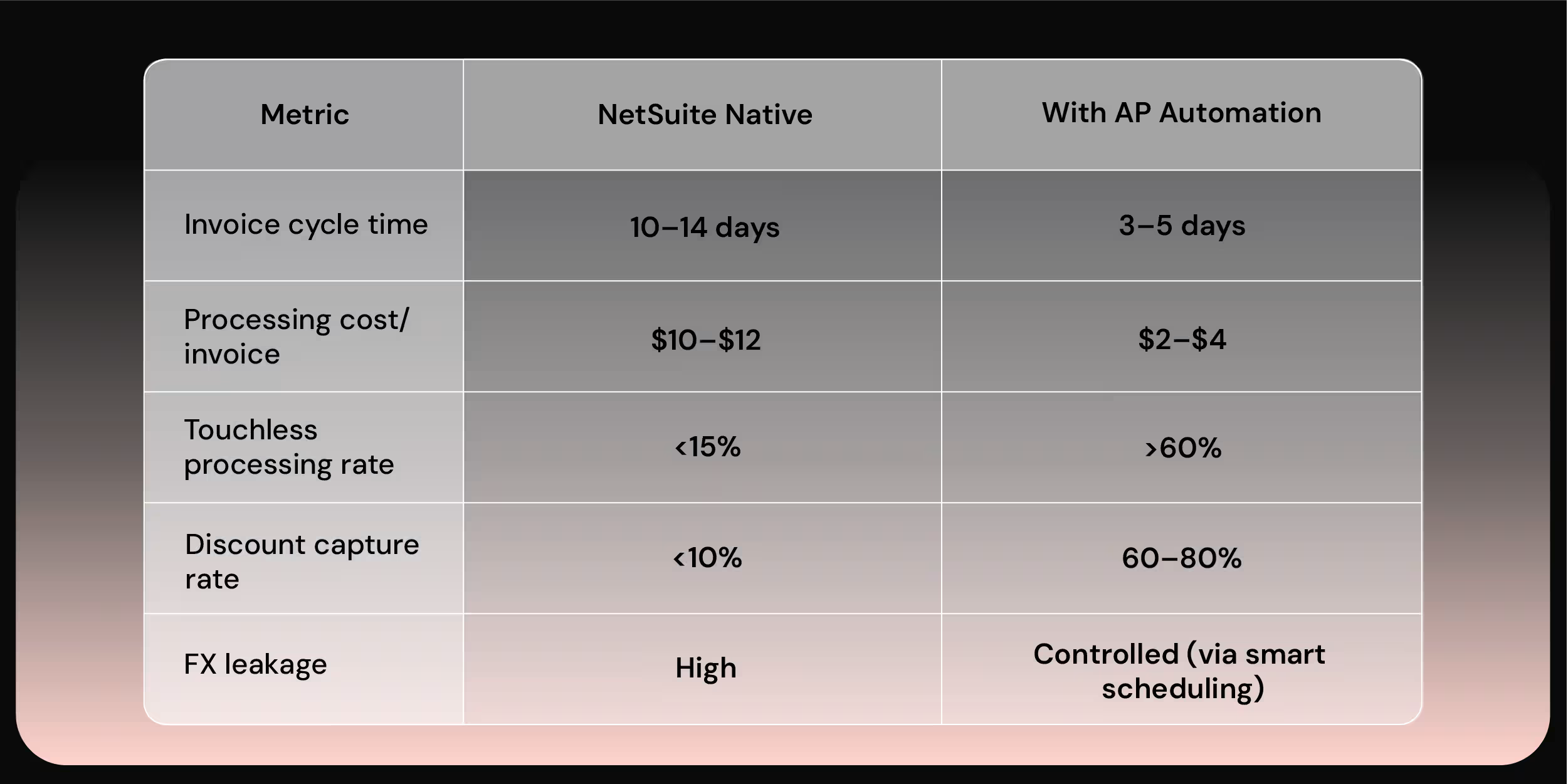
Data Snapshot: What It’s Costing You
What Modern Finance Teams Are Doing Instead
Forward-thinking teams aren’t replacing NetSuite, they’re augmenting it.
Modern AP automation platforms layer on capabilities like:
- OCR + AI invoice capture
- Auto 3-way PO matching
- Policy-based approval workflows
- Multi-currency payment rails with FX optimization
- Real-time payable forecasting
This shifts AP from a manual cost center to a controllable liquidity lever without leaving NetSuite.
Strategic Impact for CFOs
For companies processing 500+ invoices/month or operating across multiple entities
and currencies, NetSuite’s limitations become strategic risks:
- Lost working capital efficiency from missed discounts and early payments
- AP staff burnout due to manual tasks
- Inconsistent global compliance across currencies, vendors, and banks
- Missed FX opportunities and unpredictable liquidity gaps
Platforms like Finofo offer deep NetSuite integration while automating the entire invoice-to-pay lifecycle freeing up time, cash, and headcount.
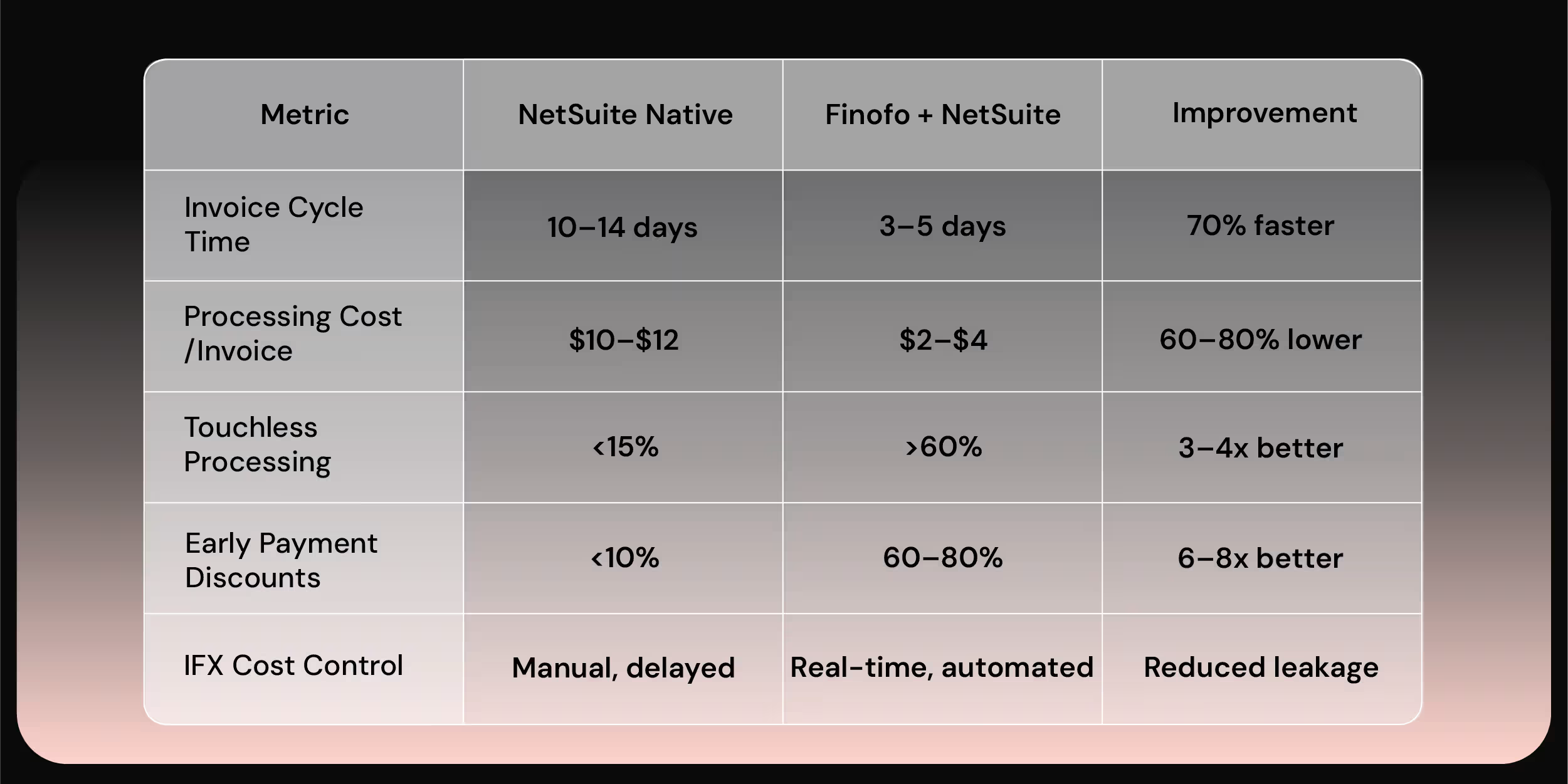
ROI Benchmarks: Native NetSuite vs Augmented AP
If you're using NetSuite, your ERP is solid but your AP process probably isn’t.
Manual invoice entry, clunky approvals, and disconnected global payments are symptoms of a broader issue: NetSuite wasn't built for modern AP automation.
The fix isn’t ripping out NetSuite, it’s plugging in smart automation.
That’s where Finofo comes in.
Ready to automate NetSuite AP?
Book a demo to see how Finofo eliminates manual work, cuts costs, and brings global AP into one intelligent workflow inside your NetSuite environment.