Logistics companies don’t struggle with invoice volume alone. They struggle with invoice complexity.
Freight invoices include accessorial charges, fuel surcharges, split shipments, multi-entity billing, and cross-border payments. Manual Accounts Payable (AP) workflows simply don’t scale in that environment.
For finance leaders in logistics firms, AP automation is no longer a back-office efficiency project. It’s a working capital and risk control initiative.
Why Logistics AP Is More Complex Than Other Industries
Logistics companies process:
- High invoice volumes across multiple carriers
- Line-item heavy freight bills
- Multi-entity and multi-currency transactions
- Contract-based pricing with frequent exceptions
According to benchmarks, the average cost to process an invoice manually is $10–$15, with cycle times of 14–18 days.
In logistics, that number is often higher due to exception handling.
Key Complexity Drivers
1. Accessorial Charges & Variance Matching
Fuel surcharges, detention fees, and storage costs often vary from contracted rates. Manual reviews slow approvals.
2. Freight Accruals & Cut-Off Accuracy
AP must accrue for in-transit shipments at month-end. Without automation, accruals are estimates, not data-driven.
3. Multi-Entity Operations
Regional warehouses or subsidiaries require intercompany allocations and currency handling.
4. Cross-Border Payments & FX Exposure
International freight payments introduce FX leakage if not centrally managed.
Where AP Automation Delivers the Most Impact in Logistics
1. Freight Invoice Matching at Scale
Automated systems use OCR and AI to:
- Extract data from freight invoices
- Match against POs, contracts, and shipment receipts
- Flag accessorial variances automatically
This reduces dispute cycles and prevents overpayments.
APQC reports companies using automated 3-way matching reduce payment errors by 60–70%.
For logistics firms, this is critical where quantity and rate mismatches are common.
2. Freight Accrual Accuracy & Month-End Close
Logistics companies often operate on tight monthly reporting cycles.
Manual accrual processes result in:
- Over-accruals (cash tied up unnecessarily)
- Under-accruals (surprise expense swings)
Automation integrates shipment and receipt data into AP, improving accrual accuracy and shortening close cycles.
3. Working Capital Optimization
AP automation impacts Days Payable Outstanding (DPO).
Top-quartile automated AP teams average 65 days DPO, compared to 47 days for manual teams.
For logistics firms operating on thin margins, even a 5-day DPO improvement can unlock significant liquidity.
Example:
$10M annual spend ÷ 365 × 5 days = ~$137K working capital unlocked.
4. FX & Global Payment Control
International freight payments introduce FX spread variability.
Decentralized payments often:
- Hide FX markups
- Create unpredictable payment timing
- Reduce visibility into cross-border exposure
Centralized, automated AP platforms help reduce FX leakage
For logistics companies with multi-currency operations, this directly improves margin predictability.
Best Practices for AP Automation in Logistics
1. Implement Line-Item Level Matching
Freight invoices often contain 20–100+ line items.
Best practice:
Automate line-item matching against contracts and shipment data, not just
header-level totals. This prevents accessorial overbilling from slipping through.
2. Integrate Shipment & Warehouse Data
3-way matching should connect:
- PO or freight contract
- Invoice
- Goods receipt / shipment confirmation
Without warehouse integration, AP cannot validate delivered quantities.
3. Automate Exception Routing
Not every variance requires CFO review.
Set thresholds such as:
- <3% variance auto-approved
- 3–7% escalated to operations
- 7% routed to finance
This preserves control without slowing cycle time.
4. Centralize Global Payments
If you operate across borders:
- Consolidate FX handling
- Use policy-based payment scheduling
- Track real-time disbursement visibility
This reduces FX leakage and improves treasury coordination.
5. Measure the Right KPIs
Logistics AP leaders should track:
- Cost per invoice
- Touchless processing rate
- Freight invoice variance rate
- Accrual accuracy %
- DPO improvement
- Discount capture rate
Without baseline metrics, ROI is hard to quantify.
Real-World Impact
Here’s what benchmark data shows across industries:
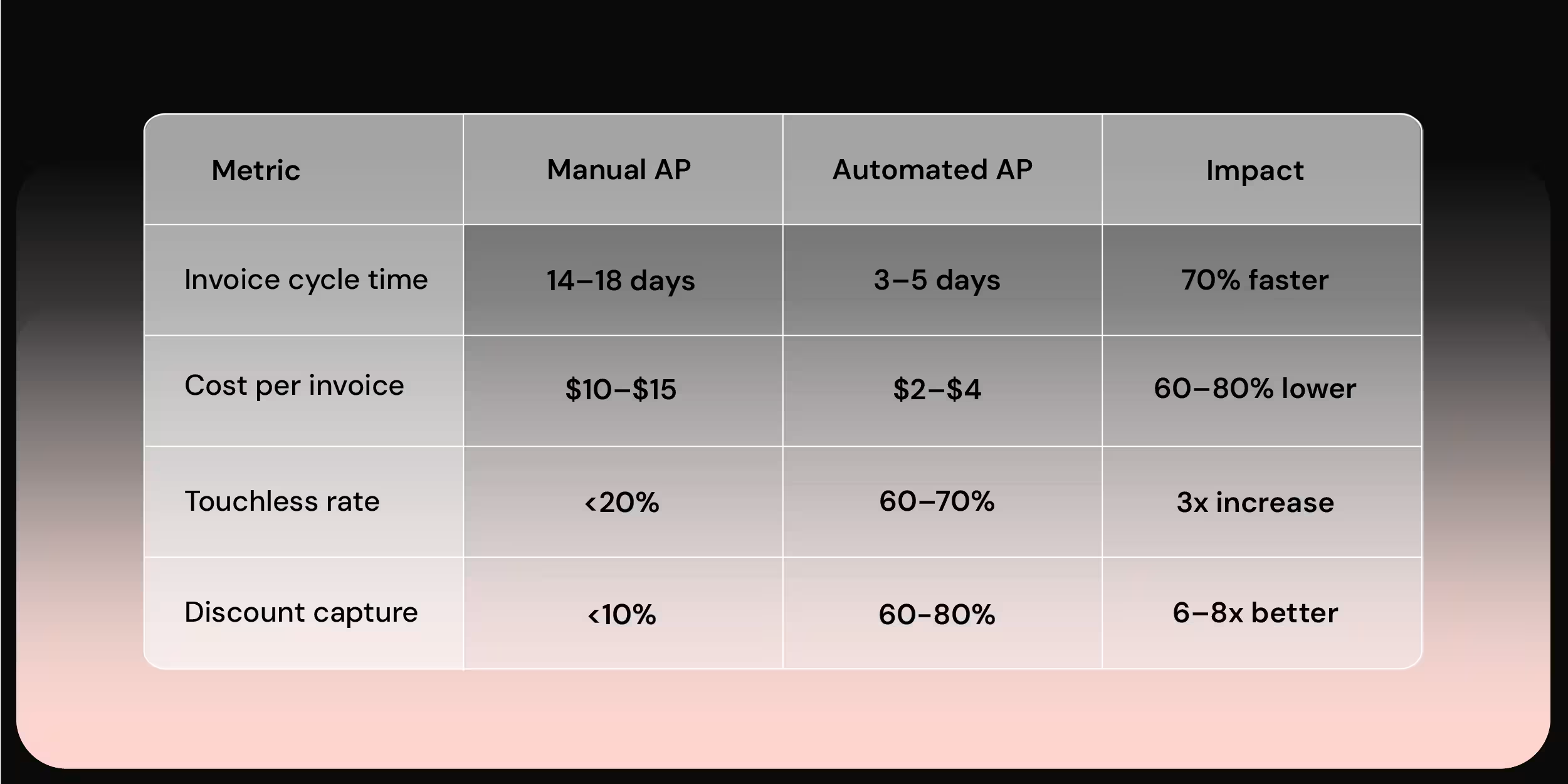
For a logistics company processing 1,000 invoices per month:
- Manual processing cost: ~$120K–$180K annually
- Automated processing cost: ~$24K–$48K annually
- Potential savings: ~$90K–$130K per year
Strategic Implications for Finance Leaders
AP automation in logistics is not just about invoice scanning.
It enables:
- Predictable freight cash outflows
- Reduced disputes with carriers
- Better contract compliance
- Stronger treasury alignment
- Scalable growth across entities
As logistics companies expand globally, manual AP becomes a constraint on growth.
Automation removes that ceiling.
If you're running a logistics operation across multiple warehouses, carriers, or countries, your freight network may be modern but your AP process probably isn’t.
Manual freight matching, spreadsheet-based accruals, siloed entities, and fragmented global payments are signs of a deeper issue: traditional AP workflows weren’t built for logistics complexity.
The answer isn’t replacing your ERP or disrupting operations. It’s layering intelligent automation on top of your existing systems adding control, visibility, and scalability where it matters most.
That’s where Finofo comes in.
Ready to Modernize Logistics AP?
Finofo helps logistics finance teams automate freight invoice processing, enforce 3-way matching at scale, and streamline approvals without replacing your ERP.
Book a demo to see how you can reduce manual workload, improve payment accuracy, and gain real-time visibility into your payables.