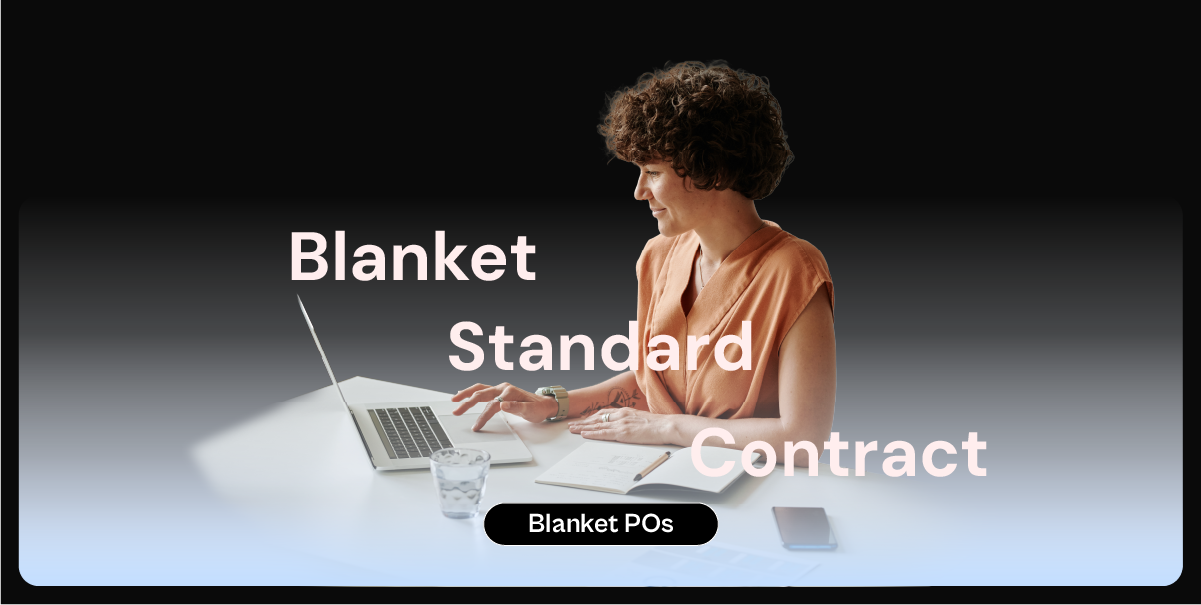
Procurement teams generally have three instruments for authorizing spend: standard purchase orders, blanket purchase orders, and contracts or master service agreements. Each one handles a different pattern of buyer to supplier interaction.
Misusing the instrument is a common source of procurement friction. A standard PO process applied to recurring small purchases creates administrative overhead. A blanket PO applied to one off variable spend creates control gaps. A contract without supporting purchase instruments creates a relationship document with no spending mechanism.
This article lays out what each instrument is for, where the overlap is, and how to combine them when the spend pattern needs more than one.
The Three Instruments Compared
Each instrument answers a different question and has a different scope.
Standard PO
A standard purchase order is a single transaction authorization. It specifies the supplier, the items, the quantities, the price, and the delivery terms for a defined order. The PO is consumed when the order is delivered, received, invoiced, and paid.
Standard POs work well for one off purchases, low frequency transactions, or any procurement where each order has materially different attributes (different items, different quantities, different specifications).
Blanket PO
A blanket purchase order is a standing authorization that supports multiple releases over time. It defines the supplier, the items or service categories, the pricing structure, the total limit, and the validity period. Individual releases consume the blanket limit.
Blankets work well for repeat purchases of consistent items from a known supplier over a defined period.
Contract or MSA
A contract or master service agreement governs the commercial relationship between buyer and supplier. It establishes terms (pricing, delivery, warranty, intellectual property, liability) but does not necessarily commit to any specific spend.
Contracts are foundational for important supplier relationships, particularly where the terms are negotiated and need to apply across multiple transactions. The contract sits above the transactional procurement instruments. A buyer can have a contract with a supplier and use standard POs against it, blanket POs against it, or both.
When the Layered Approach Makes Sense
Many procurement situations need more than one instrument working together. The layered approach combines them so each handles its appropriate scope.
Contract plus blanket plus releases
A common pattern for strategic suppliers. The contract sets the commercial framework: rates, terms, performance obligations, intellectual property treatment. The blanket PO operationalizes spending under the contract, with a defined annual limit and validity period. Individual releases call off against the blanket as needs arise.
This pattern works well for IT services, professional services, and indirect categories with consistent supplier relationships.
Contract plus standard POs
When the supplier relationship is important but transactions are variable and infrequent. The contract establishes the terms. Each transaction generates a standard PO that references the contract for pricing and other terms.
This works for project based engagements, equipment purchases under a framework, or specialty items procured from a strategic supplier on an irregular schedule.
Blanket without an overarching contract
For smaller suppliers or transactional categories where formal contracting is overhead, the blanket can serve double duty: it defines the commercial terms (pricing, delivery, terms) and authorizes the spending. This is common for MRO suppliers, office supplies, and lab consumables.
The Decision Framework by Spend Pattern
The choice of instrument should be driven by the underlying spend pattern, not by procurement convenience or supplier preference.
One off purchases of any size
Use a standard PO. Even if the supplier is strategic, a one off purchase does not need a blanket structure. The standard PO with contract references handles it cleanly.
Recurring purchases of consistent items
Use a blanket PO. The blanket handles the volume of releases efficiently. Office supplies, recurring maintenance, predictable consumables all fit here.
Project based engagements
Use a contract plus standard POs per project phase, or a contract plus a project specific blanket. The instrument should track the project structure, not force a different cadence onto it.
Variable scope services
Use a contract or MSA with statements of work for each engagement. Blankets do not work well for variable scope because the limit and scope cannot be set meaningfully in advance.
Long term strategic supplier relationships
Always use a contract. Whether the transactional layer is blankets, standard POs, or a combination depends on the spend pattern, but the contract provides the commercial framework.
Common Mismatches
Three patterns of mismatched instrument use show up regularly.
Standard POs for high frequency repeat purchases
A maintenance team that orders the same hardware parts weekly should not be generating a new standard PO each time. The administrative overhead is wasted. A blanket PO with simple release authority compresses the cycle.
Blanket POs for variable spend
A consulting engagement where the scope is genuinely uncertain at the outset does not fit a blanket structure. Either the limit is set too tight (and gets exhausted quickly) or too loose (and creates uncontrolled commitment). A contract with project specific SOWs is the right model.
Contracts without transactional instruments
A signed MSA sits in legal's repository, but every transaction with the supplier goes through ad hoc requests that bypass procurement. The contract terms exist but are not operationalized through any PO instrument. This is common when contracts are set up but procurement does not formally adopt them as the basis for ongoing purchasing.
How to Audit Your Current Mix
A useful exercise: pull a list of the top 50 suppliers by spend, and document for each one which instruments are in use. The patterns that emerge usually show:
- Suppliers with strong volume but no blanket structure, where individual POs add unnecessary administrative load
- Suppliers with active blankets but no underlying contract, where the commercial terms are weaker than they should be
- Suppliers with contracts but no active POs of any type, suggesting either dormant relationships or off contract purchasing happening elsewhere
- Suppliers with multiple overlapping blankets, often a sign of poor coordination between business units
The audit output drives the cleanup. Each mismatch becomes a specific action: convert to blanket, add contract, consolidate overlapping blankets, or close inactive contracts.
Start Here
For the next ten supplier engagements that come across your procurement queue, ask the right instrument question before defaulting to whatever is fastest. Map the spend pattern to the instrument framework above and let that drive the choice.
After a quarter of this discipline, audit the new engagements against the old defaults. The improvement in instrument selection compounds over time as the procurement team internalizes the pattern matching.