Newest posts
- Why employees do not use expense apps, and what to do instead
- When PST shows up, put it on the product account
- When the division code is buried inside the vendor account number
- The card matched. Finance still chased the receipt.
- When one PDF holds twenty-three invoices
- Stop typing freight. The bill needs a lane description.
- Header match said yes. Line match said the SKUs disagree.
- Ship-to names the well. The cost centre on the invoice is still wrong.
- Why SharePoint is a bad AP inbox, and what to use instead
- Why the AP demo looked fine and production Canadian tax still broke
- Same vendor, many projects: why coding has to ride on the PO
- When the airline receipt is only in the email body
- Why nonprofit HST and PSB rebate splits will not invent themselves
- When mileage was a guess, and approvers could not see the route
- How a 300-page vendor statement gets matched before lunch
- When AI fills six fields by resemblance, read them before you post
- Trade name on the invoice, legal name in the vendor file
- When the PO has quantities and the quote has the prices
- When the price list drops after the PO, pay the lower amount
- Why expense reimbursements fail when they ride inside payroll
- Why a UPS invoice is a tax map, not one tax code
- Thirteen entities, one login, without the incognito dance
- Get rid of the paper PO books so the owner can stop chasing
- Hold uncertain invoice reads before a manager ever sees them
- Print, walk the office, scan, key: why cardboard boxes are optional
- Same invoice twice, and the metadata looks forged
- When the invoice is one number and the accounting math lives in a spreadsheet
- Why AP automation gets Canadian tax wrong, and how to test for it before you buy
- When five invoices arrive as one PDF and the tool cannot split them
- Why Expense Management Breaks in the Handoffs
- What Is 3-Way PO Matching and Why It Matters
- AP Automation for Manufacturing: Unique Challenges & Solutions
- Foreign Currency Expenses Without the Spreadsheet Math
- Solving the Missing Receipt Problem
- From Receipt Chaos to GL Ready Entries
- Spend Policy Checks Before the Approver
- One Approval Inbox for Invoices and Expenses
- Reimbursements Are Just Payables
- Card Statements That Actually Tie Out
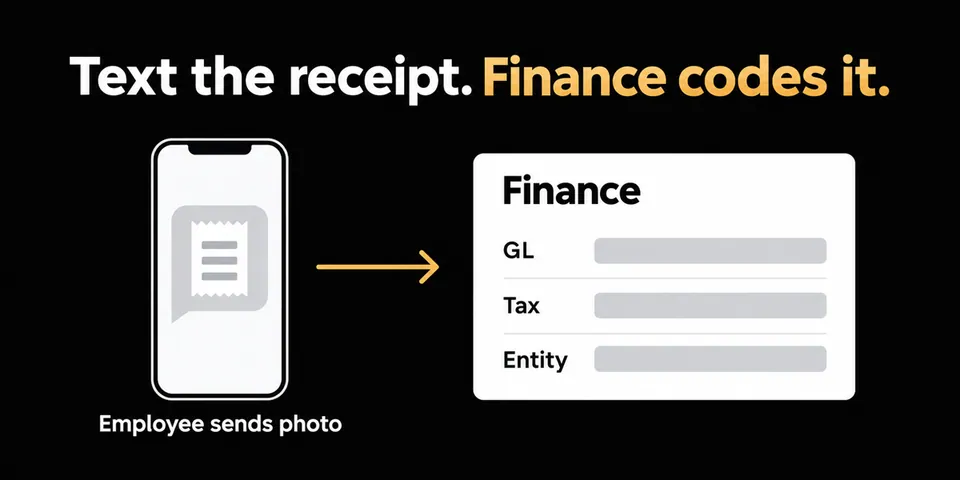
- Receipts by Text: Capture Without the Chase
- Fix Expense Management Without Switching Card Programs
- Built in Canada vs Supported in Canada: What the Difference Means for Your AP Workflow
- PIPEDA, Provincial Privacy Law, and Your AP Workflow: What Finance Should Actually Know
- Why Foreign AP Tools Create Friction for Canadian Regulated and Public Sector Adjacent Work
- Where Does Your AP Data Actually Live? Questions to Ask Your Vendor Stack
- Data Residency Is Now a Procurement Question: What Canadian Finance Teams Get Asked
- Catching Tax Variances Before the ERP, Not After the Close
- GST, HST, PST, and QST on One Invoice: Handling Multi Province Vendors Without Manual Review
- The Tax Rounding Problem: Why Pennies Multiply Into Month End Cleanup
- Self Assessed Tax on Cross Border Purchases: The AP Gap Most Finance Teams Miss
- Why Canadian Invoice Tax Breaks at the Header Level (and How Line Level Capture Fixes It)
- The Hidden Cost of Open Ended Blanket POs (and How to Close Them)
- Blanket PO Governance: Who Can Release, Who Approves, Who Owns the Limit
- Blanket POs for Services: Why They Need a Different Approval Model
- Blanket POs for Indirect Spend and MRO: A Practical Setup Guide
- Managing Blanket PO Expirations Before They Disrupt Operations
- Three Way Matching on Blanket PO Releases: What Breaks and How to Fix It
- Releases and Call Offs Against Blanket POs: Workflow Design Guide
- Setting Blanket PO Limits and Tracking Consumption Against Them
- Blanket PO vs Standard PO vs Contract: Choosing the Right Procurement Instrument
- Blanket POs Explained: When They Help and When They Hurt
- Year End Supplier Credit Reconciliation: What to Clear Before Books Close
- Returns, RMAs, and Credit Triggers: Closing the Loop Between Receiving and AP
- Duplicate Payment Recovery: Turning AP Errors Into Credit Reclamation
- Volume Rebates and Earned Discounts: How They Show Up as Supplier Credits
- Reconciling Supplier Credits Against Vendor Statements
- The Aging Supplier Credit Problem: When Old Credits Become a Write Off Risk
- Credit Notes, Debit Memos, and Supplier Credits: Terminology That Trips Up AP
- Recovering Unclaimed Supplier Credits: A CFO's Recovery Audit Playbook
- How to Track and Apply Supplier Credits: A Practical AP Workflow Guide
- Why Supplier Credits Are the Most Commonly Missed Working Capital Source
- Strategic Vendor Reviews: The Quarterly Check Finance Should Run With Procurement
- Vendor Termination and Offboarding: The Workflow Most Teams Don't Have
- Vendor Master Governance Across Entities: One Vendor, Many Books
- Vendor Statement Reconciliation: Closing the Loop With Your Suppliers
- Ongoing Vendor Compliance: Beyond One Time KYC at Onboarding
- Detecting Vendor Banking Changes That Shouldn't Be Trusted
- Managing Inactive Vendors: When to Archive, When to Remove
- Vendor Master Cleanup and Deduplication: A Step by Step Approach
- Single Source Supplier Dependencies: The Continuity Risk Hiding in Your Spend
- Vendor Concentration Risk: What CFOs Should Track and Report
- Building Vendor Performance Scorecards That Finance Actually Uses
- Vendor Risk Management Beyond Sanctions Screening
- Vendor Segmentation: Strategic, Operational, and Transactional Tiers
- Designing a Vendor Onboarding Process That Scales With Your Business
- Vendor Master Data: The Foundation of Reliable AP and Reporting
- Vendor Insurance and Certification Tracking Through Contract Management
- Contract Audits Before Year End: A Practical Checklist for Controllers
- Building a Contract Calendar: Forward Visibility for Finance Teams
- Centralizing Contract Data Across Entities and Acquisitions
- Pricing Escalator Clauses: How They Quietly Inflate Spend Over Time
- Multi Year Commitments and Their Impact on Working Capital Planning
- Termination Clauses and Notice Periods: The Hidden Risks in Your Contracts
- MSAs vs SOWs: A Finance Operator's Guide to the Difference That Matters
- SaaS Contract Sprawl: How Finance Can Regain Control of Subscription Spend
- The Contract Repository: The Foundation Most Finance Teams Skip
Payment Rail Systems posts

Payment Rail Systems
FedNow RTR: Transforming American Payment Systems
FedNow RTR (Real-Time Rail) marks a significant leap in the evolution of the United States' payment systems. As an initiative by the Federal Reserve, FedNow is set to revolutionize the landscape of financial transactions with its promise of instant, 24/7 payment and settlement services. In this article, we delve into the workings of FedNow, its anticipated impact on the economy, and how it stands to redefine the dynamics of modern-day transactions.

Payment Rail Systems
How RTGS transforms High-Value Transactions in India
In this article, we explore the RTGS (Real-Time Gross Settlement) payment system in India. We'll discuss its key features, benefits, and how it facilitates secure, real-time high-value transactions. Learn how RTGS enhances payment efficiency and plays a critical role in India's financial infrastructure.

Payment Rail Systems
Fedwire Fundamentals in the US
Fedwire, operated by the Federal Reserve Banks in the United States, is a real-time gross settlement system that plays a vital role in the American financial landscape. Handling millions of transactions daily, with an estimated value running into trillions of dollars, Fedwire facilitates high-value, time-critical payments across the nation. This article will delve into the mechanics, benefits, and significant usage of Fedwire, underlining its importance in the fast-paced world of financial transactions.

Payment Rail Systems
Faster Payment Systems (FPS) in Hong Kong
The Faster Payment System (FPS) in Hong Kong represents a significant step forward in the region’s digital payment landscape. Launched by the Hong Kong Monetary Authority (HKMA), FPS offers real-time, cross-bank money transfers, allowing for efficient and immediate transactions. This system enables payments and fund transfers using simple identifiers like mobile phone numbers or email addresses, significantly simplifying the process of sending and receiving money.

Payment Rail Systems
Exploring PIX: Brazil's Answer to Instant Payments
PIX, Brazil's innovative digital payment system, represents a significant shift in the country's approach to financial transactions. Launched by the Central Bank of Brazil, PIX offers a fast, secure, and efficient method for transferring funds, enabling instant payments 24/7. This platform allows users to make and receive payments within seconds using mobile phones, internet banking, or ATMs, using key identifiers like phone numbers, email addresses, or unique PIX keys.

Payment Rail Systems
EFT Explained: How Money Moves Between Accounts in Canada
In Canada, Electronic Funds Transfer (EFT) epitomizes the efficiency of modern financial systems, facilitating direct bank-to-bank transfers with robust security protocols. As a cornerstone of digital transactions, EFT leverages automated clearing house networks, ensuring precise, traceable, and timely fund movement between accounts, essential for sophisticated cash flow management in accounting practices.

Payment Rail Systems
Exploring NETS in Singapore
NETS, short for Network for Electronic Transfers, is a fundamental pillar in Singapore's digital payment landscape. Renowned for facilitating seamless and efficient electronic transactions, NETS offers a range of services from direct debit to contactless payments. It caters to a variety of needs, including retail purchases, transport fares, and online shopping, making it an integral part of daily financial activities in Singapore.

Payment Rail Systems
BI-Fast: Redefining Payment Systems in Indonesia
In this article, we delve into BI-Fast, Indonesia's 24/7 instant payment system. We'll explore its key features, benefits, and how it is transforming financial transactions across the country. Discover how BI-Fast enhances payment speed, efficiency, and security, making it an essential component of Indonesia’s financial infrastructure.

Payment Rail Systems
CERTIS: Understanding the Czech Republic's Payment Network
Let's explore CERTIS, the backbone of the Czech payment infrastructure. We will discuss its features, benefits, limitations, and how businesses in the Czech Republic utilize this payment network.

Payment Rail Systems
Basics of ACH Payments in America
The Automated Clearing House (ACH) network is a crucial component of the United States' payment rail system. Serving as an electronic fund-transfer system, ACH facilitates the movement of money between banks across the country. This article provides an overview of how ACH operates, its role in simplifying transactions like direct deposits and bill payments, and its significance in the broader context of US financial operations.

Payment Rail Systems
A Closer Look at BACS Payments in the UK
The Bankers' Automated Clearing Services (BACS) is a cornerstone of the United Kingdom's financial infrastructure, facilitating electronic transactions across the nation. Established over five decades ago, BACS has evolved to become a key player in managing direct debits and credits, processing millions of transactions daily. This article explores the intricacies of BACS, its role in the UK's banking system, and how it continues to support a wide array of financial activities, from payroll processing to bill payments, reinforcing its position as an essential component of the UK's economic framework.