Newest posts
- Why employees do not use expense apps, and what to do instead
- When PST shows up, put it on the product account
- When the division code is buried inside the vendor account number
- The card matched. Finance still chased the receipt.
- When one PDF holds twenty-three invoices
- Stop typing freight. The bill needs a lane description.
- Header match said yes. Line match said the SKUs disagree.
- Ship-to names the well. The cost centre on the invoice is still wrong.
- Why SharePoint is a bad AP inbox, and what to use instead
- Why the AP demo looked fine and production Canadian tax still broke
- Same vendor, many projects: why coding has to ride on the PO
- When the airline receipt is only in the email body
- Why nonprofit HST and PSB rebate splits will not invent themselves
- When mileage was a guess, and approvers could not see the route
- How a 300-page vendor statement gets matched before lunch
- When AI fills six fields by resemblance, read them before you post
- Trade name on the invoice, legal name in the vendor file
- When the PO has quantities and the quote has the prices
- When the price list drops after the PO, pay the lower amount
- Why expense reimbursements fail when they ride inside payroll
- Why a UPS invoice is a tax map, not one tax code
- Thirteen entities, one login, without the incognito dance
- Get rid of the paper PO books so the owner can stop chasing
- Hold uncertain invoice reads before a manager ever sees them
- Print, walk the office, scan, key: why cardboard boxes are optional
- Same invoice twice, and the metadata looks forged
- When the invoice is one number and the accounting math lives in a spreadsheet
- Why AP automation gets Canadian tax wrong, and how to test for it before you buy
- When five invoices arrive as one PDF and the tool cannot split them
- Why Expense Management Breaks in the Handoffs
- What Is 3-Way PO Matching and Why It Matters
- AP Automation for Manufacturing: Unique Challenges & Solutions
- Foreign Currency Expenses Without the Spreadsheet Math
- Solving the Missing Receipt Problem
- From Receipt Chaos to GL Ready Entries
- Spend Policy Checks Before the Approver
- One Approval Inbox for Invoices and Expenses
- Reimbursements Are Just Payables
- Card Statements That Actually Tie Out
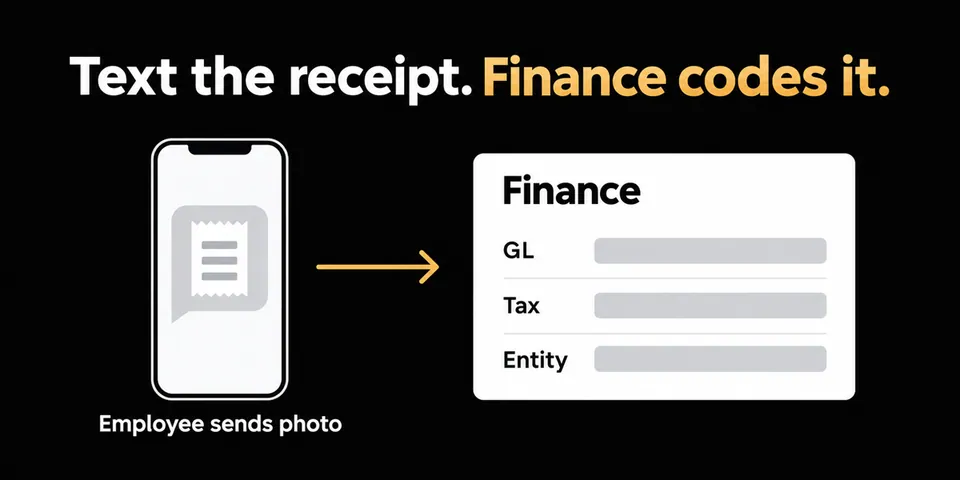
- Receipts by Text: Capture Without the Chase
- Fix Expense Management Without Switching Card Programs
- Built in Canada vs Supported in Canada: What the Difference Means for Your AP Workflow
- PIPEDA, Provincial Privacy Law, and Your AP Workflow: What Finance Should Actually Know
- Why Foreign AP Tools Create Friction for Canadian Regulated and Public Sector Adjacent Work
- Where Does Your AP Data Actually Live? Questions to Ask Your Vendor Stack
- Data Residency Is Now a Procurement Question: What Canadian Finance Teams Get Asked
- Catching Tax Variances Before the ERP, Not After the Close
- GST, HST, PST, and QST on One Invoice: Handling Multi Province Vendors Without Manual Review
- The Tax Rounding Problem: Why Pennies Multiply Into Month End Cleanup
- Self Assessed Tax on Cross Border Purchases: The AP Gap Most Finance Teams Miss
- Why Canadian Invoice Tax Breaks at the Header Level (and How Line Level Capture Fixes It)
- The Hidden Cost of Open Ended Blanket POs (and How to Close Them)
- Blanket PO Governance: Who Can Release, Who Approves, Who Owns the Limit
- Blanket POs for Services: Why They Need a Different Approval Model
- Blanket POs for Indirect Spend and MRO: A Practical Setup Guide
- Managing Blanket PO Expirations Before They Disrupt Operations
- Three Way Matching on Blanket PO Releases: What Breaks and How to Fix It
- Releases and Call Offs Against Blanket POs: Workflow Design Guide
- Setting Blanket PO Limits and Tracking Consumption Against Them
- Blanket PO vs Standard PO vs Contract: Choosing the Right Procurement Instrument
- Blanket POs Explained: When They Help and When They Hurt
- Year End Supplier Credit Reconciliation: What to Clear Before Books Close
- Returns, RMAs, and Credit Triggers: Closing the Loop Between Receiving and AP
- Duplicate Payment Recovery: Turning AP Errors Into Credit Reclamation
- Volume Rebates and Earned Discounts: How They Show Up as Supplier Credits
- Reconciling Supplier Credits Against Vendor Statements
- The Aging Supplier Credit Problem: When Old Credits Become a Write Off Risk
- Credit Notes, Debit Memos, and Supplier Credits: Terminology That Trips Up AP
- Recovering Unclaimed Supplier Credits: A CFO's Recovery Audit Playbook
- How to Track and Apply Supplier Credits: A Practical AP Workflow Guide
- Why Supplier Credits Are the Most Commonly Missed Working Capital Source
- Strategic Vendor Reviews: The Quarterly Check Finance Should Run With Procurement
- Vendor Termination and Offboarding: The Workflow Most Teams Don't Have
- Vendor Master Governance Across Entities: One Vendor, Many Books
- Vendor Statement Reconciliation: Closing the Loop With Your Suppliers
- Ongoing Vendor Compliance: Beyond One Time KYC at Onboarding
- Detecting Vendor Banking Changes That Shouldn't Be Trusted
- Managing Inactive Vendors: When to Archive, When to Remove
- Vendor Master Cleanup and Deduplication: A Step by Step Approach
- Single Source Supplier Dependencies: The Continuity Risk Hiding in Your Spend
- Vendor Concentration Risk: What CFOs Should Track and Report
- Building Vendor Performance Scorecards That Finance Actually Uses
- Vendor Risk Management Beyond Sanctions Screening
- Vendor Segmentation: Strategic, Operational, and Transactional Tiers
- Designing a Vendor Onboarding Process That Scales With Your Business
- Vendor Master Data: The Foundation of Reliable AP and Reporting
- Vendor Insurance and Certification Tracking Through Contract Management
- Contract Audits Before Year End: A Practical Checklist for Controllers
- Building a Contract Calendar: Forward Visibility for Finance Teams
- Centralizing Contract Data Across Entities and Acquisitions
- Pricing Escalator Clauses: How They Quietly Inflate Spend Over Time
- Multi Year Commitments and Their Impact on Working Capital Planning
- Termination Clauses and Notice Periods: The Hidden Risks in Your Contracts
- MSAs vs SOWs: A Finance Operator's Guide to the Difference That Matters
- SaaS Contract Sprawl: How Finance Can Regain Control of Subscription Spend
- The Contract Repository: The Foundation Most Finance Teams Skip
AI for Finance posts

AI for Finance
AI for Finance SOPs: How to Document, Scale, and Stop Rebuilding from Scratch
Finance SOPs are always out of date. The process changed six months ago and nobody updated the documentation. AI can change that, not by writing SOPs from scratch, but by capturing process knowledge as a continuous byproduct of the work itself.

AI for Finance
AI for Working Capital Forecasting: From Static Snapshot to Dynamic Model
Working capital management has traditionally been backward looking. AI changes that by building a forward looking, dynamic model that updates as AR, AP, and inventory data change in real time.

AI for Finance
AI Revenue Forecasting: Drivers, Models, and Where Human Judgment Still Sets the Range
AI is genuinely good at the quantitative layer of revenue forecasting. It falls short at the qualitative layer. Here's how to structure a forecasting process that uses both effectively.

AI for Finance
AI for the 13 Week Cash Flow: A Practical Treasury Forecasting Guide
The 13 week cash flow is treasury's most important operational tool. Most teams still build it manually. Here's how AI automates the data assembly and keeps the forecast current and what the treasury still has to own.

AI for Finance
Why Data Cleanup Comes Before Finance AI and How to Do It
Finance AI projects fail more often on data quality than on tool selection. Here's what to audit, what to fix, and in what order, before any AI goes live.

AI for Finance
AI for Account Reconciliation: Practical Use Cases and Limits
Account reconciliation is one of the clearest finance use cases for AI because so much of the work is repetitive, structured, and driven by exceptions.

AI for Finance
AI for Budget vs Actual Commentary: Faster First Drafts, Better Review
This is a narrower workflow than full variance analysis, but an important one: turning known movements into clear, concise, management-ready commentary faster.

AI for Finance
AI Spend Analysis for CFOs and Controllers: Where It Actually Helps
Spend analysis improves when finance gets cleaner supplier data, sharper exception ranking, and better challenge questions, not just more dashboards.

AI for Finance
AI for Working Capital Visibility: What Finance Teams Can See Earlier
Working capital pressure usually builds before it becomes obvious in cash. AI helps finance connect the early signals across receivables, payables, inventory, and operations.

AI for Finance
How to Use AI for Management Commentary Without Losing Judgment
AI can make commentary faster and more consistent, but finance still has to decide what matters, what is temporary, and what message should go up to leadership.

AI for Finance
How Finance Teams Can Use ChatGPT and Claude Securely
Secure AI use in finance is not about banning tools. It is about defining approved environments, data boundaries, and review rules before usage scales on its own.

AI for Finance
AI Dashboards for CFOs: From Raw Data to Decision-Ready Insight
A stronger dashboard does more than display metrics. It helps the CFO see what changed, what matters, and what deserves action now.

AI for Finance
AI Scenario Planning for CFOs and FP&A: From Model Building to Decision Support
AI can make scenario planning faster and more useful, but only if finance uses it to clarify drivers, compare cases, and support decisions rather than generate endless model versions.

AI for Finance
How Finance Leaders Should Prompt AI in 2026: Context, Structure, and Review Rules
The finance teams getting real value from AI are not using clever tricks. They are using disciplined prompts built around context, structure, and explicit review rules.

AI for Finance
AI for Month End Close: Where It Actually Delivers
Month end close hasn't changed much in decades. AI is starting to change specific parts of it. Here's the honest breakdown of where it creates real leverage and where human judgment still does the work.

AI for Finance
AI Variance Analysis in FP&A: A Practical Workflow Guide
Variance analysis consumes more FP&A time than almost any other close task. AI can take the first pass. Here's how to structure the workflow so analysts spend less time pulling data and more time explaining what actually happened.

AI for Finance
AI for Board Reporting: A CFO's Practical Guide
Board reporting is one of the most time consuming deliverables in the CFO calendar. Here's where AI takes real work off the team and what the CFO still has to own.

AI for Finance
The Finance AI Tool Stack: A Practical Framework
Finance teams are adding AI tools faster than they are integrating them. Here's a framework for the five core layers of a finance AI stack, what each should do and how to evaluate what you actually need.